How does a 40,000-hour trio control a Rust server?
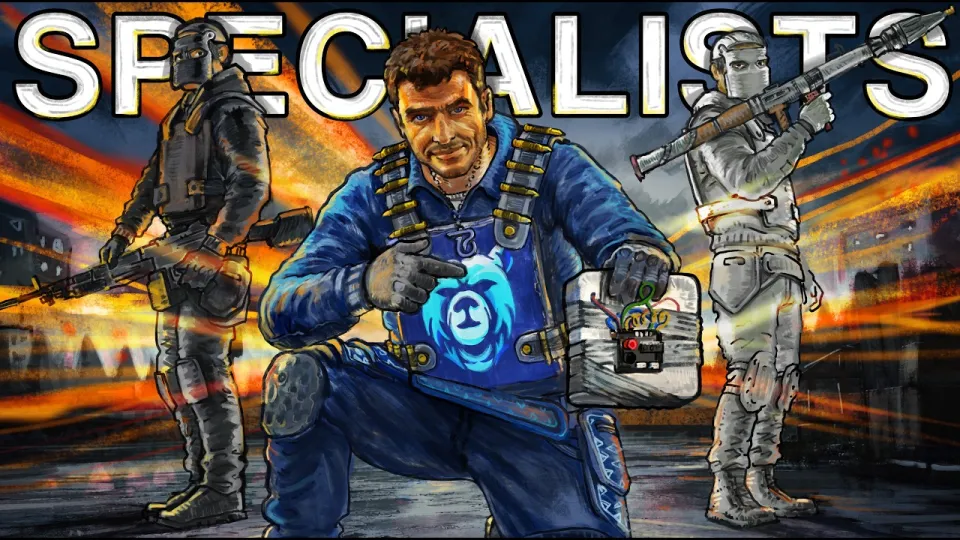
Video: How a 40,000-Hour Trio CONTROLS a SERVER - Rust
Want articles like this for your own video to promote it on YouTube and Google? Order them through the Telegram bot @sat_sit_bot. The bot writes and publishes the articles itself (with your YouTube video embedded) on popular topical websites (no ads). Free trial — 50 articles.
· based on the channel Blooprint
A 40,000-hour trio controls a Rust server by converting raw playtime into tempo: fast early progression, a base built for defense and quick loot access, and relentless roaming pressure that keeps rivals on the back foot. Blooprint, Disfigure and Nine take that approach into a 500+ population wipe, and the result is a group that ends up raiding the competition rather than hiding from it. You can follow Blooprint's live sessions and see the raw, unedited version of that playstyle on his Twitch channel.
The premise of the run is deliberately modest. The wipe begins without major ambitions, and the domination happens almost by accident once the trio's habits kick in. That is the interesting part for anyone trying to improve: the difference between a good trio and a server-controlling trio is rarely mechanical skill alone.
What 40,000 hours actually buys a Rust trio
Experience in Rust shows up first as routine, not as flashy aim. A group with tens of thousands of combined hours has already solved the boring problems: what to farm first, which monuments to hit on day one, how much scrap to bank before the first workbench, and when a fight is worth taking.
That routine compresses the early wipe. Instead of debating, the trio moves through the standard progression in a fixed order:
- Secure a starter base near a useful monument and a manageable neighbor set.
- Push workbench and blueprint progression while farming components for guns and explosives.
- Convert surplus materials into raid tools rather than letting them sit in boxes.
- Start roaming with whatever tier of kit the group can sustain, then escalate.
Each step is unremarkable on its own. Stacked together across a whole wipe, they produce a group that reaches high-tier gear while most of the server is still fighting over Tier 1 loot. That gap is what people mean when they say a trio "controls" a server.
Base design and the black catacomb skin
The base is the engine of server control, and the trio's build leans on a compact, layered layout rather than a sprawling compound. Multiple layers of walls, tight loot rooms, and short internal rotations mean a defender can move between shooting angles without exposing the core.
One detail viewers keep returning to is the black catacomb wall skin. Cosmetics do not change armor values, but consistent skins make a base easier to read for the people who live in it and harder to read for raiders peeking through gaps. In a wipe where the group expects to be online raided, familiarity with your own layout is a real defensive advantage.
The practical lesson for smaller groups: build for the fight you expect, not for the screenshot. A base that is fast to defend beats a base that is impressive to look at.
Roaming with M2 and L9 instead of hoarding
The clearest signal of a confident trio is high-tier gear leaving the base. Roams with an M2 and an L9 are expensive, and most players never take those weapons out because losing them feels worse than never using them.
That gear fear is exactly what separates a group that controls a server from one that merely survives on it. Taking top-tier kits into open fights does three things at once:
- It generates kills and loot without farming for them.
- It denies rivals the monuments and roads they need for progression.
- It builds a reputation that changes how other players behave around your group.
Not every roam pays off. The point is that the expected value of aggressive play is higher than the expected value of a gun that never fires. A trio with 40,000 hours behind it understands that losing a kit is a cost of doing business, not a catastrophe.
Online raids and base defense decide the wipe
Raiding is where server politics get settled. Offline raiding a small group removes loot; online raiding a real competitor removes their ability to fight back. The trio's wipe escalates into raiding the competition, and that is the phase where the hours show most clearly.
Online raids demand coordination that cannot be improvised: who holds the outside, who brings explosives, who watches for counters, and where the loot goes once a wall opens. Defense works the same way in reverse. When a group gets hit, the response is not panic but a rotation through pre-planned angles while someone repairs and someone re-kits.
A few habits make the difference in these moments:
- Keep a stocked secondary kit ready so a defender can re-enter the fight immediately.
- Bank explosives and raid tools close to the exit, not in the deepest room.
- Assign roles before the raid starts, not during it.
- Expect a counter-raid and keep enough players free to answer it.
Groups that lose online fights usually lose them in the first thirty seconds, before anyone has fired a shot.
Reading the viewer debates around the run
Audience reaction to a wipe like this tends to split into a few predictable arguments, and each one is worth thinking about. One recurring theme is suspicion: when quiet players on a server suddenly start winning fights, viewers call it out. Sometimes that is a genuine skill jump from a group that finally got gear; sometimes it is not. The honest answer is that a single clip rarely proves either case.
The second theme is nostalgia for older trio lineups and older Rust in general. Long-time viewers remember specific eras of roaming and raiding fondly, and they measure new wipes against them. That is fair, but it also means the current run gets judged against a highlight reel rather than against an average wipe.
The third theme is simpler: plenty of people watch Rust content without playing the game at all. They follow the story of a wipe, not the mechanics. That is why the narrative beats, the failed plays, and the absurd moments land as hard as the big raids.
Why non-players still follow a Rust wipe
Rust is unusually good television because every wipe has stakes. Loot is lost permanently, bases fall, and alliances collapse within days. A trio run gives that story a fixed cast, which makes the escalation readable even to someone who has never crafted a workbench.
Blooprint's format leans into this. The wipe is presented as a sequence of decisions with consequences rather than a highlight compilation, so the audience understands why a raid matters and what it costs. That structure is the reason a 500+ pop server becomes a setting rather than a stat line.
For players, the same structure works as a study guide. Watch where the trio spends its first hour, how quickly it converts farm into raid capability, and how it handles a defense when the tables turn.
Useful links
- Live streams: https://www.twitch.tv/blooprint
- Kick: https://kick.com/blooprint
- TikTok: https://www.tiktok.com/@blooprintgames
- Twitter: https://twitter.com/blooprintgames
- Discord: https://discord.gg/blooprint
The takeaway from a server-controlling wipe
A 40,000-hour trio does not control a Rust server through secret tricks; it controls one through tempo, disciplined base design, and a willingness to risk good gear in open fights. The wipe described here starts small and snowballs because the group keeps converting advantage into more advantage instead of sitting on it. Online raids and coordinated defense finish the job that early progression starts. The Blooprint channel is the place to watch that process play out in full, and the live stream at twitch.tv/blooprint is where the next wipe begins.
Key takeaways
- Blooprint, Disfigure and Nine bring roughly 40,000 combined hours to a 500+ population server.
- The wipe starts with no grand plan and escalates into raiding every competing group on the server.
- The trio's edge is tempo: fast early progression, compact base layout, and constant roaming pressure.
- High-tier gear like the M2 and L9 goes out on roams instead of sitting in boxes.
- Server control comes from online raids and base defense, not from hoarding loot.
Source: How a 40,000-Hour Trio CONTROLS a SERVER - Rust · Markdown version
Questions & answers
How many hours does the trio in this Rust wipe actually have?
The title puts the group at roughly 40,000 combined hours, split across Blooprint, Disfigure and Nine. That total reflects years of wipes, raids and PvP rather than a single server's experience. It is the main reason their early progression looks so routine.
What population was the server in this run?
The video describes a 500+ population server, which is high enough that competition for monuments and loot is constant. On a server that size, controlling territory requires active roaming and raiding rather than passive base building. It also means counter-raids are almost guaranteed.
Why do experienced players take M2s and L9s out on roams instead of storing them?
High-tier weapons only generate value when they are used, whether that means kills, loot or map pressure. Keeping them in a box protects the item but gives up every opportunity it could create. Experienced groups accept the loss risk because the expected return is higher.
Is it suspicious when quiet players on a server suddenly start winning fights?
Not necessarily. A group that finally completes gear progression can look completely different from the same group an hour earlier. That said, a sudden jump in consistency is also a reasonable thing for viewers to question, and a single clip rarely settles it either way.