Valorant Champions Shanghai Group Stage Day 2 Sets the 2026 World Title Race
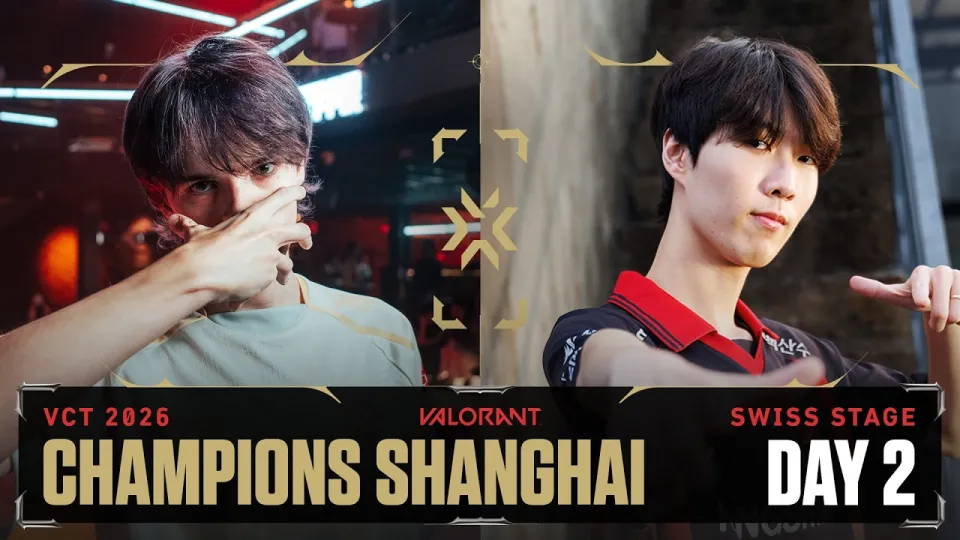
Video: VALORANT Champions Shanghai — Group Stage — Day 2
Want articles like this for your own video to promote it on YouTube and Google? Order them through the Telegram bot @sat_sit_bot. The bot writes and publishes the articles itself (with your YouTube video embedded) on popular topical websites (no ads). Free trial — 50 articles.
· based on the channel VALORANT Champions Tour
Valorant Champions Shanghai is the 2026 VALORANT World Championship, where 16 teams from the Americas, CN, EMEA and Pacific regions fight for the biggest trophy of the year. The group stage Day 2 broadcast, published by the VALORANT Champions Tour channel on September 25, 2026, captures the early shape of that race. For schedules, updates and official posts, follow the tournament's X account at VALORANT Esports on X.
What Valorant Champions Shanghai Means for the 2026 Season
Champions is the final international event of the VCT calendar and the only one that crowns a World Champion. The 2026 season opened with a shift in power: new contenders emerged, expectations were broken, and twice at Masters a different champion rose. Shanghai is where those threads meet, with the event running from September 24 to October 18. The city itself is framed as a place where history and the future live side by side, which fits a tournament built around familiar names facing a fearless generation of challengers. Sixteen teams qualified from four regions, and every group-stage map carries weight because the path to the playoff bracket is short and unforgiving.
How the Group Stage Format Shapes Day 2
The group stage is the first filter of the tournament, and its structure rewards consistency over a single hot map. Teams are sorted into groups, play through a round-robin or double-elimination style opening phase depending on the year's bracket, and only a limited number advance to the playoffs. Day 2 matters because it is the first point where adjustments become visible: teams that lost on opening day must either fix their map pool or risk an early exit, while teams that won try to convert momentum into a 2-0 start. In practice, this means viewers should watch for pick-and-ban patterns, agent comfort, and whether a team's star player is being enabled or isolated. The Day 2 broadcast on the VALORANT Champions Tour channel packages these matches into a single long-form VOD, which is why the comment section treats it as a speedrun through multiple series rather than a single showcase.
Regional Slots and the China Debate Around Valorant
One of the loudest themes in the community reaction to the Shanghai group stage is the size of China's representation. The event features four regions, and China holds four slots, which some viewers argue should be merged into Pacific so that the strongest Pacific teams can attend international events instead. The counterargument is structural: China has its own league, its own audience and its own pathway, and regional slots exist to grow the ecosystem rather than to reward only the current top eight teams in the world. What the Day 2 matches actually show is the gap between regional depth and international polish. Some Chinese teams looked dominant in domestic play but struggled against EMEA and Americas opponents on the international stage, while others held their own. The debate is less about whether China deserves a region and more about how many slots any region should get when the goal is the most competitive possible bracket.
Reading the Scorelines and the Skill Gap Talk
Another recurring reaction is that some group-stage series looked like mismatches, with viewers joking about Radiant-level teams facing Bronze-level opposition. That impression usually comes from a few specific factors rather than a true skill collapse. First, international events compress preparation time, so a team that peaked during its regional season can arrive with a stale map pool. Second, the group stage often pairs a top seed against a lower seed from another region, and the lower seed may have qualified through a weaker bracket. Third, broadcast pacing makes blowouts feel faster and more frequent than they are, because the VOD condenses downtime between rounds. The honest takeaway is that Champions group stages have always produced lopsided maps; what matters is whether the losing team adapts in the next series and whether the winning team can carry that form into the playoffs.
Communication, Interviews and Broadcast Friction
Viewers also flagged two production issues that affect how the group stage reads on stream. The first is in-game communication: one clip showed a team's comms sounding chaotic compared with the level expected at an international event, which fueled the argument that some rosters are not ready for the stage. The second is interview translation, which some fans find slow because a ten-second answer can take thirty seconds to deliver in two languages. Both complaints point to the same reality of a global esport: the broadcast has to serve multiple audiences at once, and the trade-off is either lost nuance or lost pace. For teams, the lesson is that comms discipline is a competitive advantage; for viewers, the lesson is that translation lag is a production choice, not a reflection of the players.
Spoiler Culture and How Fans Watch the VOD
The most-liked comment on the Day 2 video is a spoiler blocker with timestamps in the replies, which tells you how the VALORANT Champions Tour audience consumes long VODs. Fans want to watch series in order without knowing results, so community members volunteer timestamp lists and spoiler warnings. This is a genuinely useful practice for anyone catching up: open the video, avoid the chat and comments, and use a timestamp guide to jump between maps. It also explains why some comments complain that certain matches had no spoiler protection at all. If you are watching the Shanghai group stage after the fact, treat the comment section as a minefield and the timestamp replies as your navigation tool.
Picking, Predicting and Following the Rest of Champions
For fans who fill out Pick'Ems or bracket predictions, the Day 2 results are the first real signal. Picking against a region entirely, as some commenters admit doing with China, can look smart in the short term but fails as soon as a team overperforms. A better approach is to weigh three things: a team's map pool depth, its record against other regions in the current season, and how it performed on opening day. The 2026 season already produced two different Masters champions, which means no single region has a monopoly on the title. From here, the group stage continues toward the playoff bracket, and the teams that survive will be the ones that adapted fastest between Day 1 and Day 2.
Useful Links
- Official VALORANT Esports news and event hub: https://www.valorantesports.com/news
- X/Twitter updates: https://x.com/valorantesports
- Facebook: https://www.facebook.com/ValorantEsports/
- Instagram: https://www.instagram.com/valorantesports/
- TikTok: https://www.tiktok.com/@valorantesports
- Twitch: https://www.twitch.tv/valorant
Final Thoughts on the Shanghai Group Stage
The Day 2 broadcast from the VALORANT Champions Tour channel is a compact snapshot of where the 2026 season stands: four regions, sixteen teams, and a title race with no clear favorite. The group stage is doing its job by exposing which rosters can adapt under international pressure and which ones rely on regional comfort. The community's arguments about slots, skill gaps and broadcast pacing are part of that process, not a distraction from it. If you want to keep tracking the tournament, the fastest way is to follow the official updates at VALORANT Esports on X and watch the next VODs as they drop. The VALORANT Champions Tour channel remains the primary source for full match replays and highlights.
Key takeaways
- 16 teams from Americas, CN, EMEA and Pacific compete at VALORANT Champions Shanghai for the 2026 world title.
- The event runs from September 24 to October 18, with Day 2 of the group stage streamed on the VALORANT Champions Tour channel.
- The video is titled 'VALORANT Champions Shanghai — Group Stage — Day 2' and was published on September 25, 2026.
- VCT partners for 2026 include AWS, Coinbase, EWC, ENC, Globant, HyperX, Mastercard, OnePlus, Red Bull, Secretlab and Verizon.
- Viewer comments focus on China's four slots, lopsided maps, interview translations and a spoiler-free timestamp culture.
Source: VALORANT Champions Shanghai — Group Stage — Day 2 · Markdown version
Questions & answers
How many teams play at Valorant Champions Shanghai?
Sixteen teams qualify for the event, drawn from four regions: Americas, CN, EMEA and Pacific. They compete for the 2026 VALORANT World Championship title across the group stage and playoffs. The tournament runs from September 24 to October 18.
Why do viewers complain about China having four slots at Champions?
Some fans argue that China's four slots dilute the bracket and that the region should be merged into Pacific so the strongest Pacific teams can attend. Others point out that China has its own league and audience, and that regional slots are meant to grow the ecosystem. The Day 2 matches gave both sides material to argue about.
Why did some group stage matches look so one-sided?
Blowouts in the group stage usually come from a mix of factors: compressed preparation time, top seeds facing lower seeds from other regions, and broadcast pacing that compresses downtime. A team that peaked in its regional season can arrive at Champions with a stale map pool. The real test is whether the losing team adapts in its next series.
How should I watch the Day 2 VOD without spoilers?
The most-liked comment on the video is a spoiler blocker, with timestamps posted in the replies. Open the VOD, avoid the chat and comment section, and use a timestamp guide to jump between maps. This lets you watch series in order without learning the results in advance.